
The Times Done Randy Wrong

I’ll admit it’s a daunting challenge: coming up with a list of the 30 greatest living American songwriters. The result is guaranteed to spark loud and angry arguments across America.
The staff of the New York Times Sunday Magazine undertook this task for their May 3 issue. I was absorbed in those pages. Who made it? Who got snubbed?
Some of the winners were obvious: Bob Dylan, Bruce Springsteen, Dolly Parton, Carole King, Stevie Wonder, Paul Simon. Others were surprising to me — and educational — as a 75-year-old baby boomer: Young Thug, Romeo Santos, Missy Elliott, Lana Del Rey. These are names I hadn’t heard; it’s time to open my ears to them.
Who were the snubs? Here are a few that occurred to me: Jackson Browne, James Taylor, Billy Joel and Michael Stipe (R.E.M.).
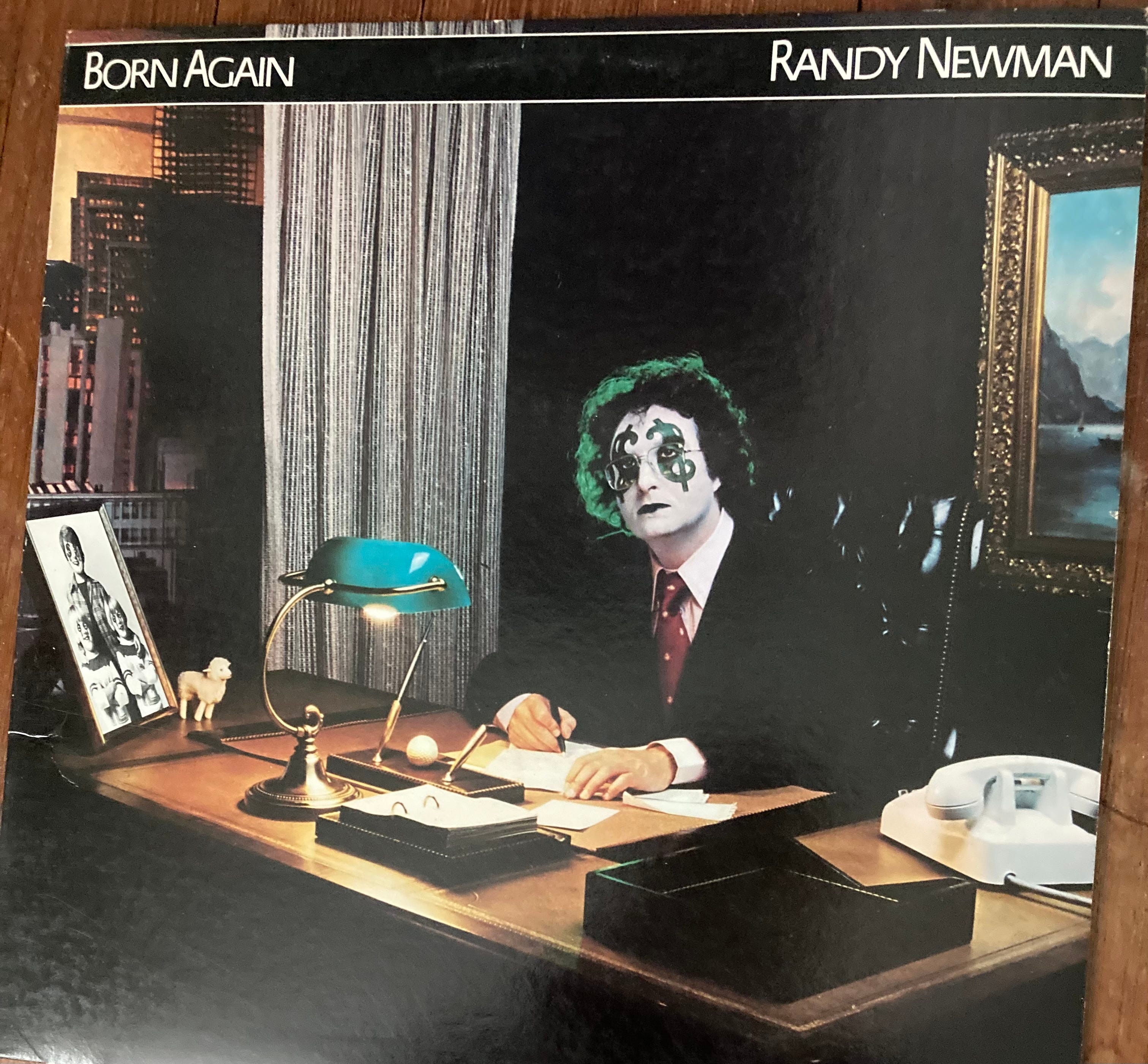
But to my mind the most unforgivable omission was Randy Newman, one of our greatest living satirists.
In an “Inside the Times” story that also ran May 3, the magazine’s staffers who compiled the list admitted: “Randy Newman was a big subject of debate.” But his backers failed to sway the others.
Who voted? The magazine’s representatives sent hundreds of ballots to musicians, critics, D.J.s, historians and music industry professionals. From there, a panel of six Times critics narrowed the 700 nominees to 30. This entire process took a year-and-a-half.
The magazine’s editors wrote an introduction in that issue, “How We Made the List.” I noted this sentence about the list-makers: “They pondered the importance of irony, grandeur, idiosyncrasy, political consciousness, personal confession.”
You want irony? You want idiosyncrasy? You want political consciousness? Randy Newman is your guy.
As someone who embraces satire in books and songs, I’ve been enjoying Newman’s music for decades. One of his earliest gems, from the 1970s, was “Political Science.” Assuming the voice of a close-minded “America first” jerk (can you think of a more modern one?), Newman begins by moaning “No one likes us — I don’t know why.” He continues: “But all around even our old friends put us down. Let’s drop the big one and see what happens.”
The singer takes us on a tour of the globe as he sees it: “Asia’s crowded and Europe’s too old/ Africa is far too hot and Canada’s too cold/ South America stole our name/ Let’s drop the big one/There’ll be no one left to blame us.”
He adds: “We’ll save Australia/Don’t wanna hurt no kangaroo/We’ll build an all-American amusement park there/They got surfin’ too.”
At the end of the song he envisions the result of this nuclear Armageddon: “Oh how peaceful it will be/We’ll set everybody free/You’ll wear a Japanese kimono and there’ll be Italian shoes for me.”
“They all hate us anyhow. So let’s drop the big one now.”
“Political Science” appeared on the album “Sail Away.” It began with Newman’s song of that name, in which he becomes a white colonial pitch man, telling soon-to-be-enslaved Africans how great it will be: “In America you’ll get food to eat/Won’t have to run through the jungle and scuff up your feet/You’ll just sing about Jesus and drink wine all day/It’s great to be an American.”
He continues by saying: “Climb aboard, little wog — sail away with me.” In the fourth verse, he promises: “You’ll be as happy as a monkey in a monkey tree/You’re all gonna be an American.”
That album also has an environmental song, “Burn On,” satirizing the fouled Cuyahoga River in Cleveland, which really did catch fire because it was so polluted: “Burn on, big river, burn on.” He rhapsodizes: “Cleveland, city of light, city of magic…The Cuyahoga River goes smokin’ through my dreams.”
Another great piece of Newman satire was on his album “Little Criminals” in 1977. “Short People” was actually a hit single, a rarity for a songwriter who usually is too subtle for the general public. Maybe “Short People” was also too subtle — a lot of people thought it was really a serious attack on folks not of normal height! A friend of mine, who stands at about five-feet-six, took great offense at these lyrics: “Short people got no reason to live…They got little noses and little teeth/They wear platform shoes on their nasty little feet.” A later verse: “They got little cars that go beep, beep, beep/They got little voices goin’ peep, peep, peep/They got grubby little fingers and dirty little minds/They’re gonna get you every time.”
In two of his songs Newman lampoons American commercialism. Check out “It’s Money That Matters” from his 1988 album “Land of Dreams”: “Then I talked to a man lived up on the county line/I was washing his car with a friend of mine/He was a little fat guy in a red jumpsuit and a great big blond wife inside it/And a great big pool in the backyard and another great big pool beside it/Sonny, it’s money that matters, hear what I say/It’s money that matters in the USA.”
And on his album “Born Again” (1979) he delivered “It’s Money That I Love.” Here you go: “They say that money can’t buy love in this world/But I’ll get you a half-pound of cocaine and a 16-year-old girl/And a great big long limousine on a hot September night/Now that may not be love but it is all right.”
No, you aren’t going to hear that on most radio stations. But Newman did score another hit song, “I Love L.A.” off his album “Trouble in Paradise” (1983). Most of the song exults in riding around with your top down, listening to the Beach Boys on “another perfect day.” “Everybody’s very happy,” he sings. But I love it that he slipped this in: “Look at that mountain, look at those trees/Look at that bum over there, man, he’s down on his knees.” If you’ve spent any time in Los Angeles, you know there are homeless people all over the streets and parks.
After singing along to “I Love L.A.,” it’s a lot less fun listening to “Roll With the Punches” from “Land of Dreams,” with the narrator saying “Mr. Rat’s on the stairway, Mr. Junkie’s lyin’ in his own vomit on the floor. You gotta roll with the punches, little black boy.”
Newman didn’t put out many albums in the years that followed, but I do have “Harps and Angels” from 2008. Oh, man, it’s as if he was forecasting life in America in 2026. From “A Piece of the Pie”: “You say you’re working harder than you ever have/ You say you got two jobs and so’s your wife/Living in the richest country in the world/Wouldn’t you think you’d have a better life.” In another verse: “Jesus Christ, it stinks here high and low/The rich are getting richer/I should know/While we’re going up, you’re going down/And no one gives a shit but Jackson Browne.”
Within the same album is a classic entitled “A Few Words in Defense of Our Country.” Dig it: “You know it kind of pisses me off/That this Supreme Court is going to outlive me/A couple of young Italian fellas and a brother on the court now, too/But I defy you, anywhere in the world/To find me two Italians as tight-assed as the two Italians we got/And as for the brother, well, Pluto’s not a planet anymore either.”
He concludes, and oh, how these words ring true: “The end of an empire is messy at best/And this empire is ending like all the rest/Like the Spanish Armada adrift on the sea/We’re adrift in the land of the brave and the home of the free.”
Dear reader, do you have a songwriter you think was snubbed by the Times? Let me know. This could be grist for another Substack essay!
Hey Randy,
Randy Newman is one ridiculous omission of the "experts" at NYT. Check out the catalogue of Missy Elliot who was one of the 30 who bypassed Randy Newman. I would introduce you to a You Tube musician/producer/interviewer of many great musicians, Rick Beato, who has taken issue with the nyt top 30 American songwriters and how it was decided. I think you will enjoy Beato's content, in general.
I would add Keith Jarrett to your snub list.